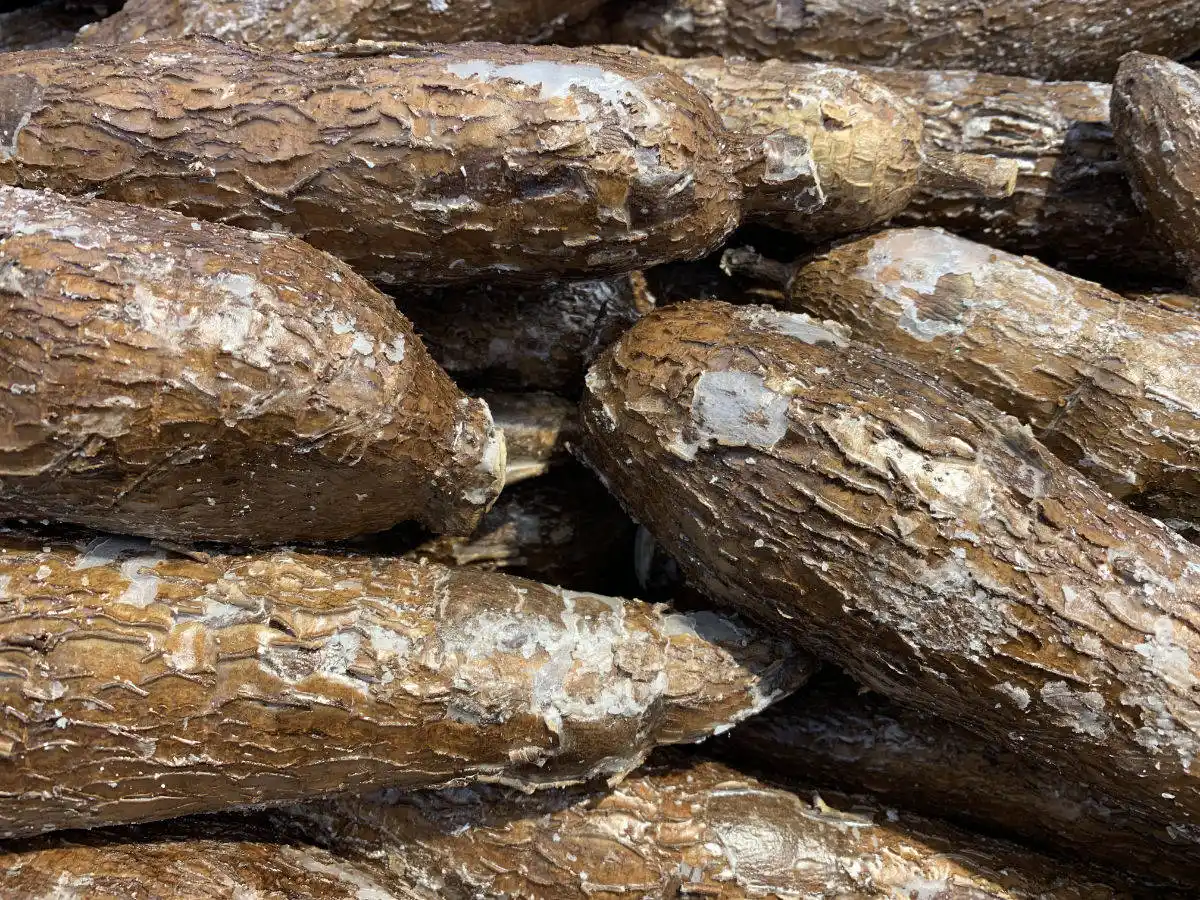
How to Prepare Cassava: Peeling, Cooking and Safety Tips
Once you try cassava, you won’t want to go back! The first time you prepare it can seem a bit daunting. However, once you learn how to handle it properly, cassava can become a versatile and nourishing staple. This is especially true if you’re following the Autoimmune Protocol (AIP), eating gluten-free, on the Paleo diet, or avoiding nightshades.
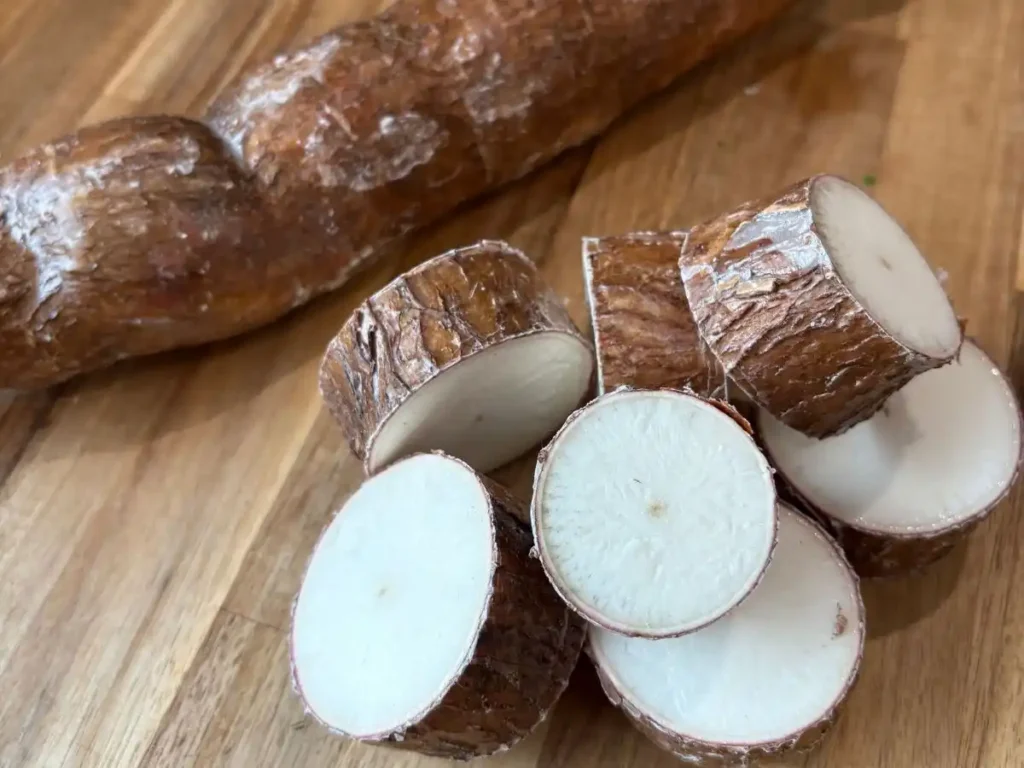
Cassava is naturally gluten-free and has a neutral flavor, making it a great potato alternative in many dishes. The key is to know how to choose, peel, and cook it safely.
In this guide, I will share everything I have learned about cassava, so you’ll have the confidence to prepare it step by step.
What Is Cassava (Yuca)?
Cassava is a starchy root vegetable widely used in African, Caribbean, Latin American and Asian cuisines. It is sometimes called Yuca, but don’t confuse it with Yucca, the ornamental plant.
Cassava is very similar to potato in how it is used. It makes a good potato alternative if you are following the AIP protocol or those cutting out potatoes for whatever reasons.
Personally, I much prefer the texture and flavor of cassava over potato. But I have never been fond of potatoes. And after we followed the Paleo diet for a bit, I really struggled to reintroduce potatoes and have thus kept them to a minimum in my diet. So I was over the moon when I discovered cassava!
Cassava has a mild, almost nutty taste. It’s flavor. I find it is super creamy in texture and just absolutely delicious! If you haven’t tried it yet, I highly recommend giving it a shot!
There are two types of cassava:
- Sweet cassava is what you’ll find in most big box grocery stores or specialty stores or markets
- Bitter cassava requires special processing and is not sold fresh in North America
If you’re buying fresh cassava at the store, you’re almost certainly buying sweet cassava.
For more info on nutritional facts and health benefits, check out this article.
Important Safety Note About Cassava
It is important that you peel and cook your cassava root properly before eating! But don’t let this discourage you. It is easier than you think!
Raw or undercooked cassava contains compounds that can be toxic. Proper peeling and boiling removes these compounds and makes cassava completely safe to eat.
And always discard the cooking water!
How to Pick the Perfect Cassava Root
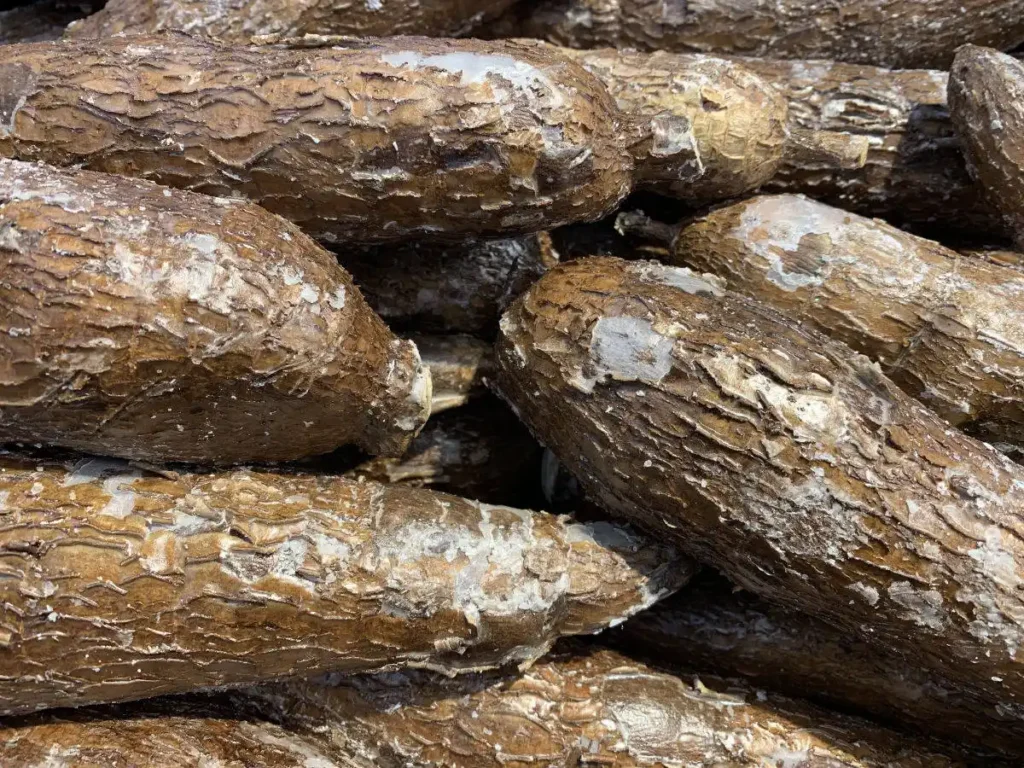
You can usually find cassava roots in the fresh produce section, near potatoes, sweet potatoes and similar produce. The skin covering looks like rough dark brown tree bark and you cannot mistake them for any other fresh produce. Plus, the root vegetable is often coated in a thin layer of wax to help preserve freshness.
Here are some tips to look for when selecting cassava:
- Make sure the cassava root is firm and heavy for its size
- It must be free of cracks, mold, or soft spots. Even a single soft spot on one end can mean the entire cassava can be off. Pay attention to this one
- It should be evenly shaped, without shriveled ends.
- Unfortunately, you can’t see the flesh of the root, so it is difficult to judge the freshness. But once you cut it open at home, the flesh should be white or creamy, with no gray color, black spots, or dark streaks.
If the inside looks gray, has black veins, or smells off, don’t eat it.
I have not had much luck finding frozen cassava yet, but I have heard of many people buying frozen cassava. This is a great option as the root is often already peeled and cut.
How to Peel Cassava (Step-by-Step)
Peeling cassava is a little bit different from other vegetables due to its thick bark. Make You will want to make sure you remove all the skin before cooking. The easiest way to peel cassava is:
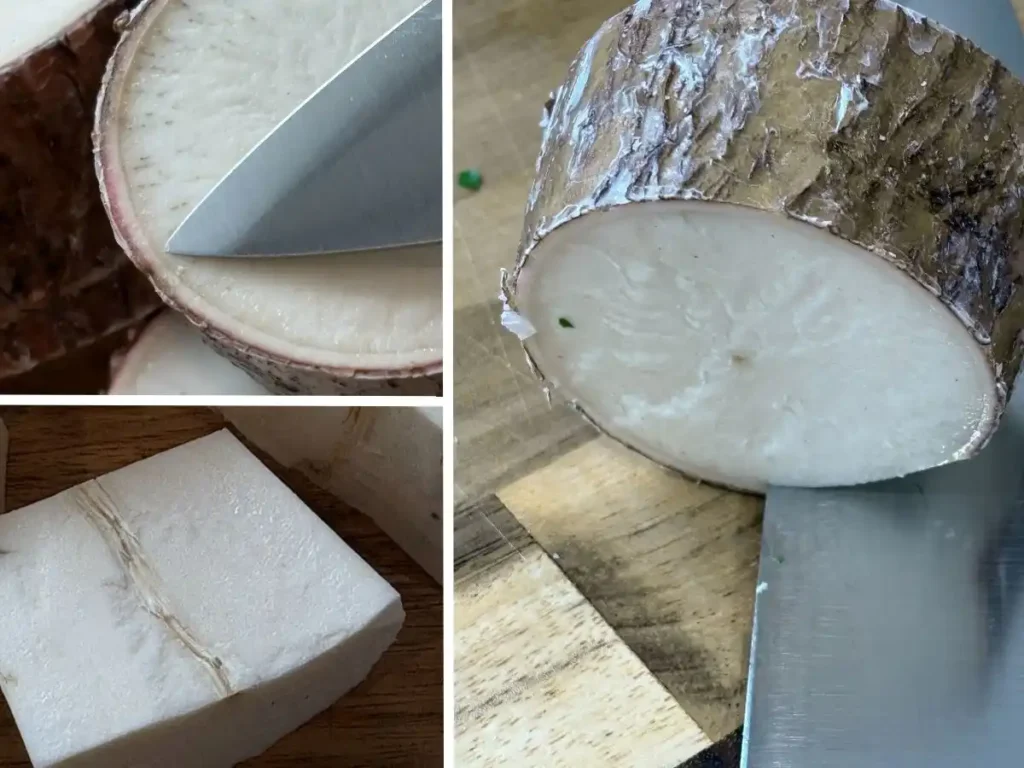
- Cut off both ends of the cassava root. Then cut the root into 2–3 inch sections to make it easier to handle.
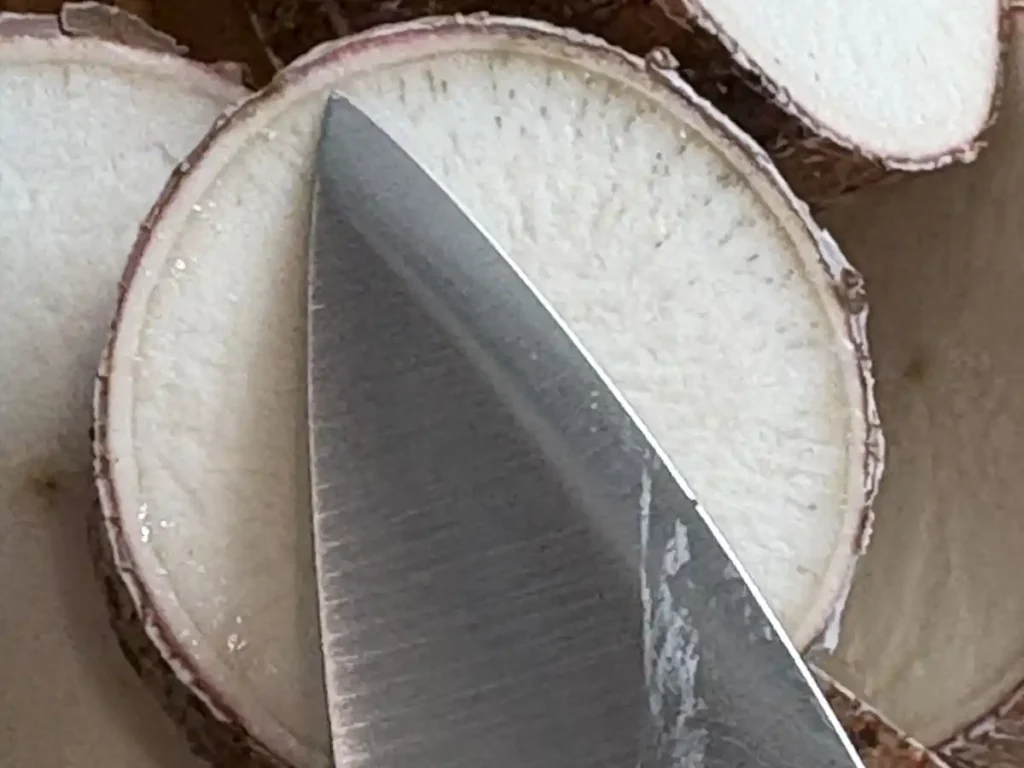
- Using a sharp knife, make a vertical cut through the skin. Slide the knife between the skin and the flesh and pry the peel away. You can clearly see where that line between the flesh and the skin is. You will feel the skin coming away from the flesh very easily, and once you have removed the first bit you can use your fingers to separate the layers.
- Do a final check to ensure you’ve make sure you have removed all layers of peel, including:
- The dark brown outer skin
- The pinkish layer underneath (this is important)
- At this point you can also trim away any marks or blemishes
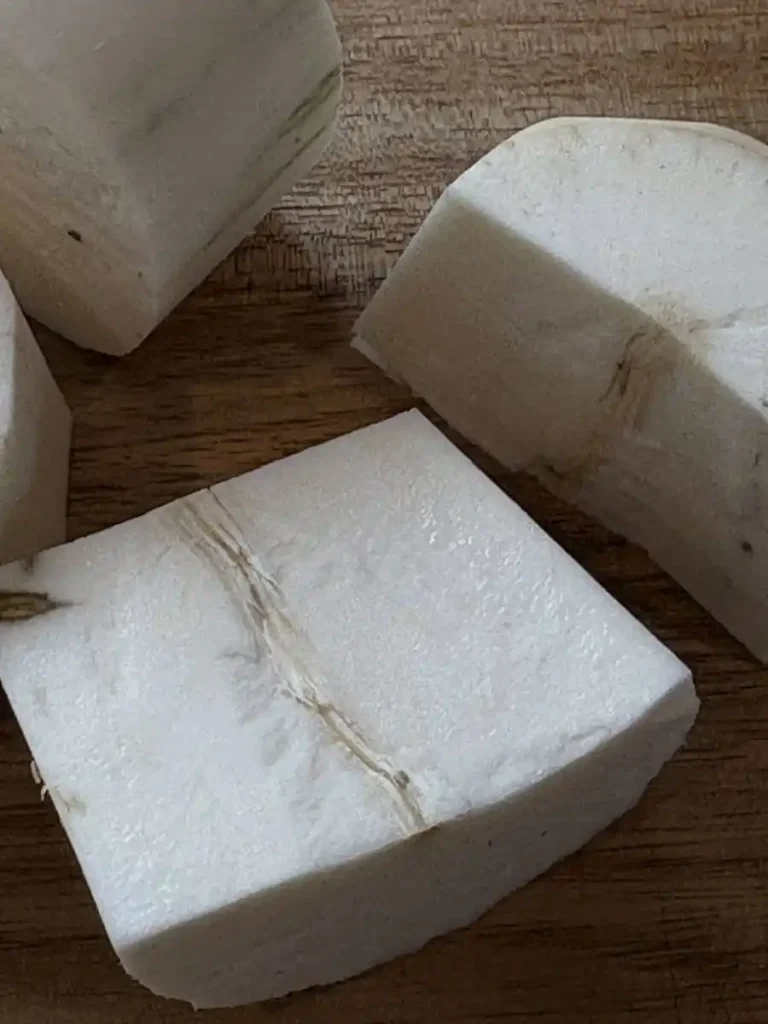
- The center of the cassava root has a fibrous core that isn’t pleasant to chew. To remove it, cut the peeled sections lengthwise into quarters and cut out the fibrous core from the middle.
Why Cassava Must Be Boiled First
Always boil cassava before frying, roasting, or adding it to other dishes. This step is not optional!
Boiling:
- Makes cassava safe to eat
- Softens the dense flesh
- Reduces cooking time for later steps
- Improves texture
This isn’t much different from potatoes, which you also want to cook beofre eating. So please don’t let this put you off! Cassava is too good not to try!
How to Boil Cassava
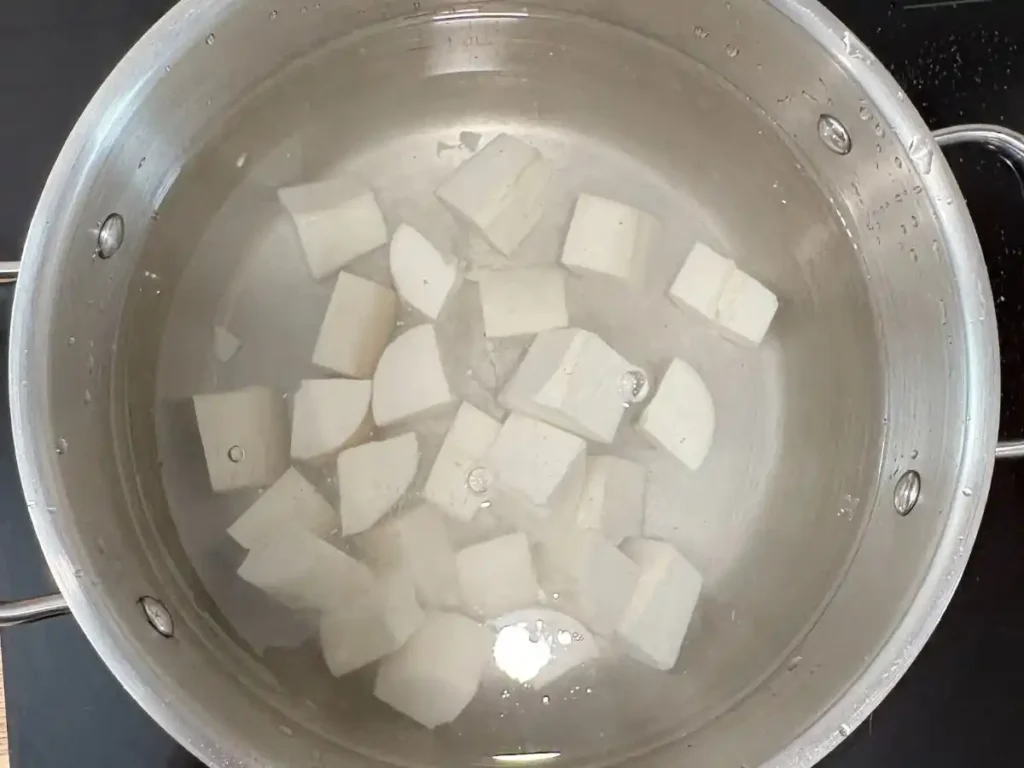
- Place the peeled, cut cassava into a large pot.
- Cover it with plenty of water.
- Add salt, like you would for boiling potatoes.
- Bring to a boil, then reduce to a steady simmer.
- Cook for 20–30 minutes until it’s fork-tender. You should be able to pierce the cassava easily with a fork, but it shouldn’t fall apart.
- Once cooked:
- Drain the cassava
- Discard the cooking water
- Do not reuse the water for soups or stews
How to Use Boiled Cassava
Once boiled, you can use cassava used in many AIP-friendly ways:
- Cassava hash with vegetables and herbs
- Added to stews and soups
- Baked or air-fried into fries
- Roasted with olive oil and garlic
- Mashed as a potato alternative
Its mild flavor makes it an excellent base for bold seasonings.
Do you have recipe or favorite dish to eat cassava with? Please comment below and share it. I love to receive feedback and would love to connect with you! Snap a picture and tag me on Instagram or find me on Pinterest.
Tips for the Best Cassava
- Check for freshness: Fresh cassava should have no cracks or soft spots and the flesh should be white or creamy and firm.
- Peel thoroughly: Removing the skin gets rid of the toxins and bitterness from the cassava root.
- Avoid overboiling: Like potatoes, overcooking will cause it to fall apart.
- Frozen cassava can work well: It is usually already peeled and you can boil it straight from frozen.
Storage and Make-Ahead Tips
Boiled cassava freezes well and reheats nicely.
- Store fresh cassava in a cool, dry place for up to 1–2 weeks.
- Do not store fresh cassava sealed in plastic.
- For longer storage:
- Peel and cut, then freeze raw
- Or boil first, let it cool completely, and then freeze
Cassava Flour vs Tapioca Flour
Cassava root is used to make two different flours:
- Cassava flour: made from the whole root; grain-free and AIP-compliant
- Tapioca flour (tapioca starch): extracted starch only
In both cases, cassava is processed and the toxins are removed. They are safe to use, but should be consumed in moderation, just like everything else.
They are not interchangeable and react differently in recipes. Both flours are excellent for cooking and baking, and you’ll find that I use both often in my recipes.