The Science Behind Red Light Therapy for Hashimoto’s
There has been a growing interest in red light therapy (RLT) for Hashimoto’s. I have seen lots of information and articles in the media, on RLT manufacturers websites, in the scientific community, and from autoimmune sufferers. I delved a little deeper into what some of the scientific studies have found. And here I summarize what I have read and how I interpret it.
NOTE: This is my interpretation and understanding of the Red Light Therapy and the publications I have read. Nothing in this blog is medical advice. What works for me, might not work for you. Always consult a professional before changing anything big that may impact your health and wellbeing. But perhaps, by sharing experiences we can learn from each other. Read my full disclaimer.
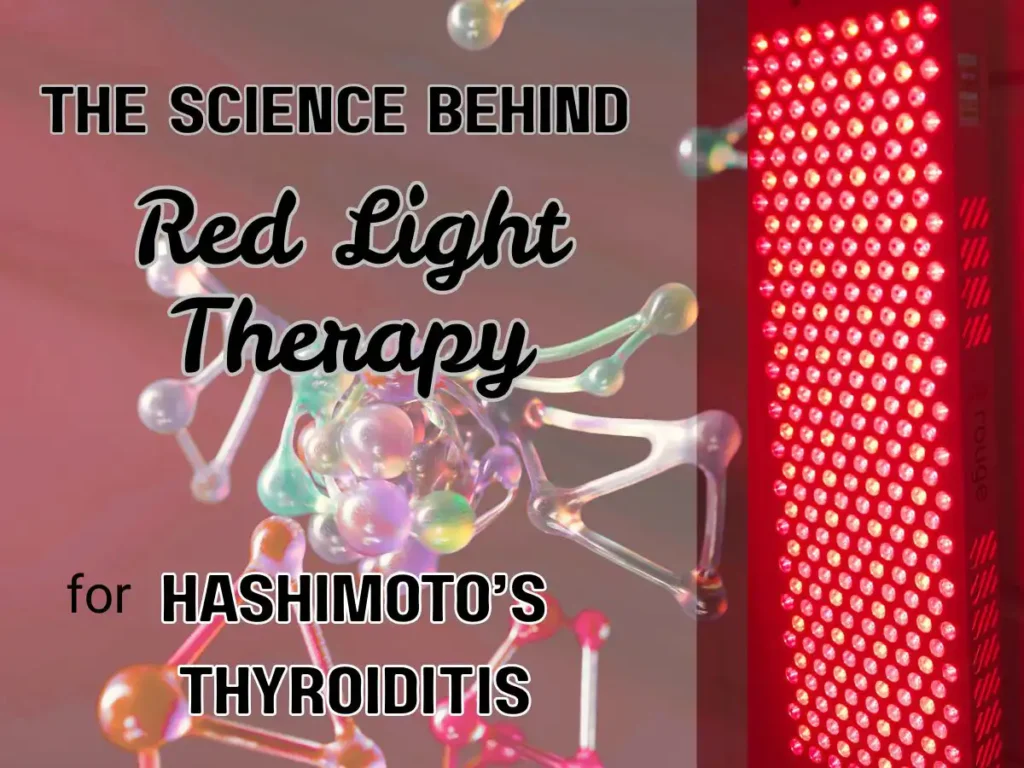
The purpose of this post is to explore the science and evidence behind RLT for thyroid health for people living with Hashimoto’s Thyroiditis.
This is not a comprehensive literature review. I have not covered every scientific paper. Sometimes I cannot access the journal article, and I most likely did not find all of the literature that is out there. But this is a summary of some.
This blog is supported by you, the readers. If you make a purchase, by clicking one of the affiliate links in this blog, I may receive a small commission at no extra cost to you. Please read the disclaimer. I appreciate your support!
What Is Red Light Therapy?
Before we get all nerdy and dive into the science, let me quickly explain what red light therapy is:
In very basic terms, RLT is the process of using a device, a light of sorts, that emits red and near-infrared light at set wavelengths. Typically these devices use wavelengths in the 600 to 1100 nanometer (nm) range.
This light penetrates your skin and stimulates your mitochondria. These are the little powerhouses within your cells that produce energy. This helps your cells produce more energy and allow the mitochondria to run more efficiently. This boost in cellular energy also helps your body calm inflammation and improve circulation. Altogether, RLT encourages your cells to repair themselves more effectively, making it a gentle and supportive tool for overall wellness.
Most commonly RLT is used to promote wound healing, aid in skin rejuvenation and help with pain relief. This is not new technology, RLT has been used for quite some time already.
RLT is also sometimes referred to as low-level laser therapy (LLLT) or photobiomodulation (PBM), but to keep it simple, I will just refer to it as RLT throughout.
Why and How Red Light Therapy May Help Hashimoto’s
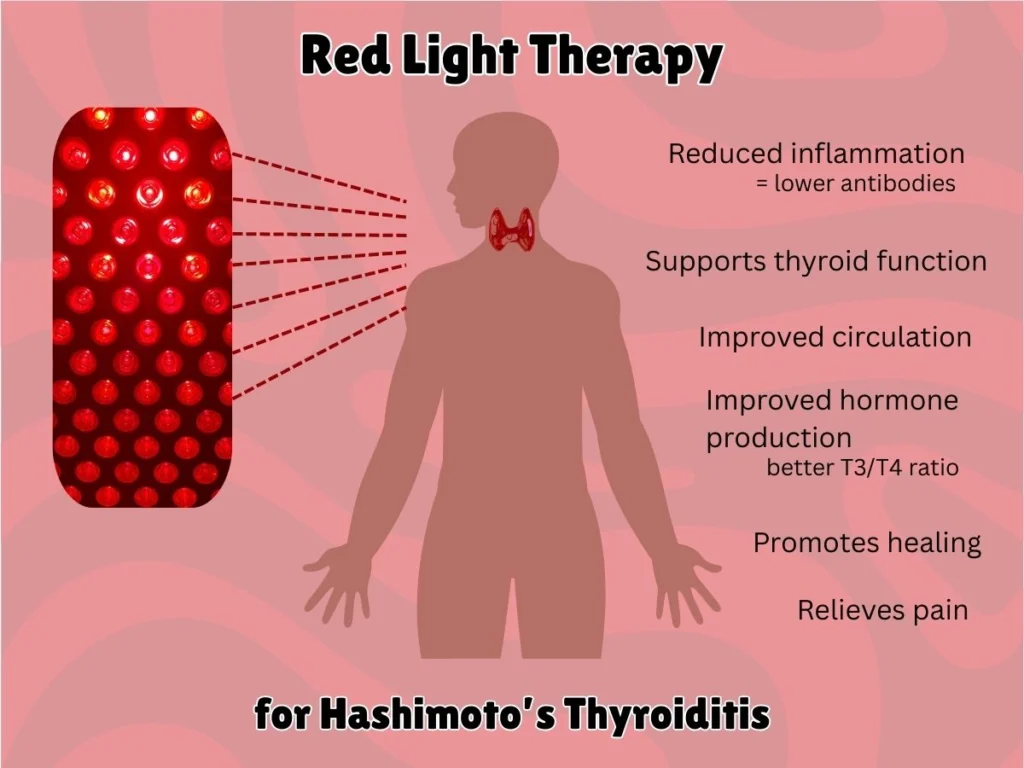
RLT may offer several benefits for people with Hashimoto’s by helping the thyroid function. Some research suggests it can reduce inflammation in the thyroid gland, support healthier cellular energy production, and improve blood flow. All of these are key factors to help the thyroid heal and thus help with hormone balance.
Some studies have shown reductions in thyroid antibodies (like TPO) and improvements in thyroid hormones such as T3 and T4, along with lower TSH levels. In certain clinical trials, patients were able to decrease their levothyroxine dosage after consistently using RLT.
It may also support tissue repair by improving thyroid structure, normalizing thyroid size, and enhancing microcirculation. Together, these effects make RLT a promising complementary approach for supporting thyroid health in for people living with Hashimoto’s.
What the Research Says
Many companies that sell RLT panels have an article on the benefits of RLT on thyroid health. Sometimes it is difficult to know if this is just a marketing gimmick or whether there is any truth behind it.
I am pretty sure many of you are thinking the same. Is it real, or just a marketing gimmick? That is why I decided to look at some of the Science, before purchasing my panel.
I haveto reiterate: this is my interpretation of these scientific studies. I am not an expert in the field and I am not a medical professional and sometimes I struggle tounderstand the medical jargon in these papers.
The summaries in this post cover journal articles I could gain access to, but definitely do not include ALL the literature out there. Some papers I did not have access to and my intention was not to do a comprehensive literature review. But instead get a basic understanding on what research has been done and what some of the studies have found.
This is my summary of all the literature I have read. And for more details on each individual study, I urge you to take a closer look at the science summaries I have provided below or to even look a bit deeper at each paper individually.
Brief Science Summary
Researchers have been studying red and near-infrared light therapy for Hashimoto’s Thyroiditis for more than 15 years. The results across many studies generally point in the same direction: this type of light therapy seems to help the thyroid work better and calm the autoimmune attack. Some studies showed that using RLT on the thyroid helped many people need less thyroid medication and improved how their thyroid looked on ultrasounds. These improvements lasted for years in one follow-up study, and importantly, researchers found no increase in thyroid nodules or cancer, showing that the therapy appears safe long-term. Scientists believe the light works by reducing inflammation in the gland, improving blood flow, lowering harmful immune activity, and giving the thyroid cells more energy so they can function and repair themselves.
Other studies have taken this a step further by combining RLT with supplements. This combination also shows some positive results, incluiding lower thyroid antibodies, better hormone levels, healthier thyroid size, and even decreases in weight and waist measurements.
Other research has shown that red and near-infrared light used on the neck, for example in beauty devices, is safe for the thyroid, with no changes in hormones or gland structure. Summary is here.
Altogether, these studies suggest that RLT is a safe, non-invasive option that may help people with Hashimoto’s by calming the immune system, reducing inflammation, and supporting better thyroid function.
Limitations and Considerations
Firstly, let me make this clear: RLT is NOT a replacement for your thyroid medication. It is NOT a miracle cure. It may help you, but it may also not. Results vary from person to person and there are many factors that can influence how much or how little it can help.
It is also not a quick fix and you may not see visible results in your lab work or your ultrasound immediately. After 4 months of use I could not say if it helped me or not. Almost a year later, I think my ultrasound is giving me very clear indication that it may indeed have made an enormous difference to my thyroid health. But not in isolation. Lifestyle changes and nutrition played a big role too!
On top of all of this, not all devices are equal. These studies used medical devices, and results may not be comparable with the devices available to us. I cannot say which is the best device or which device most closely mimics the devices used in these research studies. I bought a Rouge Panel, and I love it. And I highly recommend their products. But that does not mean that other brands are inferior. I did a lot of research on a panel, and wrote about how I chose my panel here.
And, as with so many things that impact our health and changes we would like to make, consult your doctor or medical professional.
There probably are some other limitations here that I have not covered. Please do your own research, and make an informed decision.
How to Use Red Light Therapy at Home
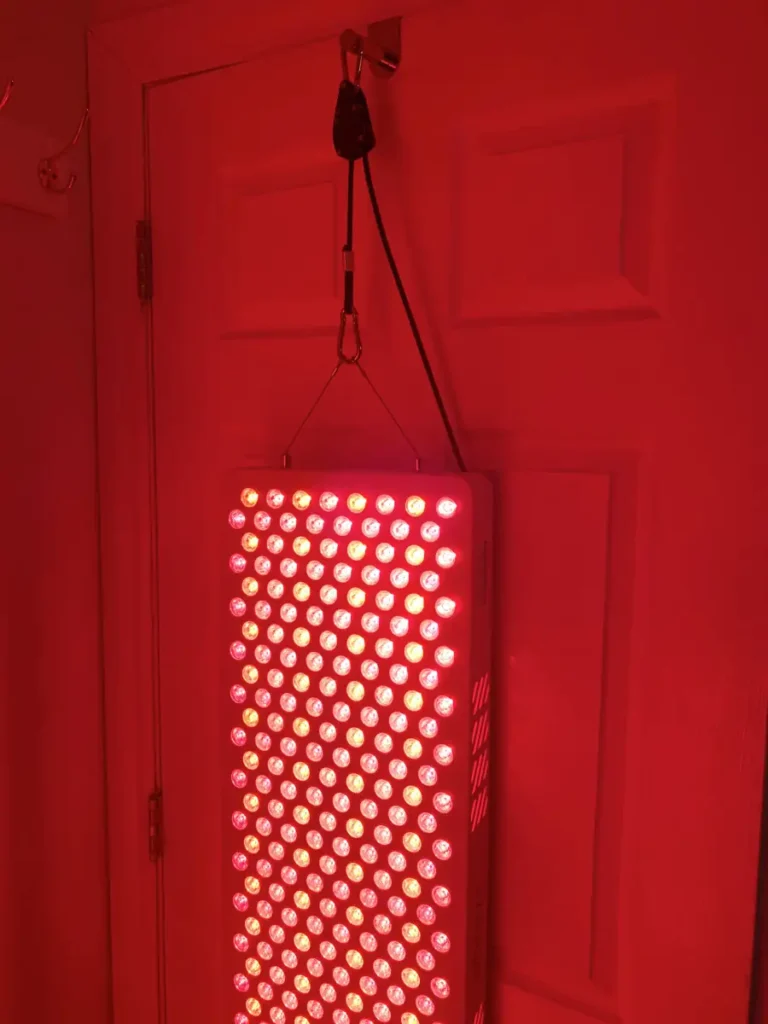
If you decide to try RLT, at home or in a studio that offers this service, the good news is that it’s generally simple and doesn’t require fancy routines. The most important thing is choosing a device that emits the right wavelengths. You will want to have at least two wavelengths: 630 nm (red light) and 850 nm (near-infrared). Most reputable panels include these or very close alternatives.
Start slowly. Expose your neck or upper chest area to the light for 1-5 minutes at first, and gradually work up to 10–20 minutes if it feels good for you. You don’t need to do it every day. Anywhere between 2 to 5 sessions per week is enough. Some weeks you may do more, some less; consistency over time matters more than perfection. Don’t stress about it too much. Some is better than none, but more is not better.
Be sure to monitor how your body responds. Some people feel more relaxed if they use the light at night; others prefer the morning. If you feel “wired” after a session, try using it earlier in the day. And don’t forget to keep checking in with your doctor and monitoring your thyroid labs. If your thyroid hormone levels start improving, you may need an adjustment to your medication.
Don’t forget that RLT alone is not a miracle cure. It is a tool in your toolbox to help you feel better. Together with good nutrition, medication if you are already on it, supplements and lifestyle changes, this may help you feel better. It is not guaranteed and it does not work for everyone. And it is not immediate. Give it time!
What to Expect in Terms of Timeline
One of the biggest questions people have is “How long will this take to work?” The truth is that RLT works slowly and gently, not overnight. Some people notice small changes in how they feel, like slightly better energy, reduced neck tightness, or less inflammation within a few days or weeks. Others don’t notice anything at all right away, and that’s normal too.
Most scientific studies show clearer changes around the 3 to 6 month mark, especially in thyroid labs like TSH, T3, T4, and antibody levels. Improvements in thyroid structure, such as less inflammation or healthier thyroid texture on ultrasound, usually take longer. Often 6-12 months of steady, consistent use. Think of RLT like a long-term investment: small deposits over time lead to bigger results later.
Your body also needs time to calm the autoimmune attack and rebuild healthier thyroid tissue, so patience is key. Don’t be discouraged if you don’t feel or see anything right away. Most people don’t! Tracking your symptoms, energy, and labs every few months can help you notice subtle trends that might otherwise be easy to miss.
I mentioned it earlier, but I will say it again. My bloodwork did not show any significant changes after 4 months. But a year later my ultrasound is telling me a completely different story.
Is Red Light Therapy Right for You?
RLT isn’t a cure for Hashimoto’s, but the research suggests it may be a helpful supportive tool. By calming inflammation, gently modulating the immune response, improving cellular energy, and supporting blood flow to the thyroid, RLT may help the thyroid function more efficiently over time. Some studies have linked this to better thyroid labs, healthier thyroid structure, and, for some people, a reduced need for medication.
If you’re curious about trying RLT, think of it as one tool in your toolbox, and not a quick fix. Start slowly, pay attention to how your body responds, and keep your healthcare provider in the loop. And if this post helped clarify things for you, feel free to share it with someone else navigating Hashimoto’s. Sometimes that small nudge of information can make a big difference.
Was this post useful? If it helped you, or if you have any questions, please leave a comment below. I love to receive feedback and would love to connect with you! Snap a picture of your set up and tag me on Instagram or find me on Pinterest.
For Those Who Want the Science
Study Objective
To evaluate the effects of RLT on thyroid function, autoantibody levels, and ultrasound parameters in patients with hypothyroidism due to chronic autoimmune thyroiditis (CAT).
Participants
- 15 patients (13 women, 2 men)
- All had CAT-induced hypothyroidism and were on levothyroxine (LT4)
Study Design
- 10 sessions of RLT (830 nm, 50 mW), twice weekly for 5 weeks
- Two application methods: sweep and punctual
- LT4 was discontinued after treatment to assess thyroid function
Key Results
Thyroid Function
- All patients required less LT4 after RLT
- 7 out of 15 (47%) no longer needed LT4 at 9-month follow-up
- Mean LT4 dose dropped from 96 µg/day to 38 µg/day
Autoantibodies
- Significant reduction in TPO antibodies (from 982 to 579 U/ml)
- Trend toward reduction in Tg antibodies (not statistically significant)
Ultrasound Findings
- Increased echogenicity index (EI) in 13 of 15 patients
- Normalization of thyroid volume in some patients
- Improved vascularization in 3 of 12 patients with pre-treatment hypervascularity
Study Objective
The researchers wanted to see whether RLT could improve abnormal blood flow patterns in the thyroid of people with autoimmune hypothyroidism, as measured by Doppler ultrasound.
Participants
- 43 patients with hypothyroidism due to chronic autoimmune thyroiditis (CAT)
- 23 patients received RLT treatment and 20 patients a placebo treatment (exposed to non-therapeutic red light)
- All patients were on levothyroxine (LT4)
Study Design
- 10 sessions of RLT (830 nm, 50 mW), twice weekly for 5 weeks
- ultrasound was done before and 30 days after treatment
- LT4 (levothyroxine) was discontinued 30 days after treatment to assess thyroid function
Key Results
Improved Thyroid Vascularization
- Post-treatment, the RLT group had a significantly higher frequency of normal thyroid vascularization compared to the placebo group.
- Suggests RLT may reduce autoimmune-induced vascular abnormalities in the thyroid.
Increased Blood Flow
- Images indicated improved blood flow.
Anti-Inflammatory Effects
- The authors suggest RLT may reduce inflammation by modulating cytokines, which are elevated in Hashimoto’s.
- This could explain the improved vascularization and potential reduction in autoimmune activity.
Study Objective
To evaluate the efficacy of RLT in improving thyroid function, reducing thyroid autoantibodies, and enhancing thyroid echogenicity in patients with hypothyroidism caused by chronic autoimmune thyroiditis (CAT).
Participants
- 43 patients with CAT-induced hypothyroidism
- 23 patients received RLT treatment and 20 patients a placebo treatment (exposed to non-therapeutic red light)
Study Design
- 10 sessions of RLT (830 nm, 50 mW), twice weekly for 5 weeks
- LT4 (levothyroxine) was discontinued 30 days after treatment to assess thyroid function
Key Findings
Thyroid Function
- The RLT group required significantly less LT4 to maintain normal thyroid hormone levels:
- RLT group: 38.6 µg/day
- Placebo group: 106.9 µg/day
- 47.8% of RLT patients remained off LT4 for 9 months
- RLT patients had lower TSH and higher free T4 levels 30 days after LT4 withdrawal
Autoimmunity
- TPOAb levels were significantly decreased in the RLT group
- No significant change in TgAb levels
Ultrasound Findings
- Echogenicity index (EI) increased significantly in the RLT group
- Thyroid volume normalized in several patients
Study Objective
This long-term follow-up study assessed the safety and sustained effects of RLT in patients with hypothyroidism caused by autoimmune thyroiditis, six years after their participation in a prior randomized clinical trial.
Participants
- 43 patients with hypothyroidism due to chronic autoimmune thyroiditis (CAT) from the Höflinger 2010 study were called back for follow up testing to study long term effects of RLT.
- Since the 2012 study, 2 more patients received RLT, thus in total 25 patients received RLT treatment and 18 patients a placebo treatment (exposed to non-therapeutic red light)
Study Design
- All 43 patients from the 2012 study were tested again. Several parameters were tested including thyroid ultrasound, bloodwork (antibodies) and LT4 dosage
Key Findin
Reduced Need for Thyroid Medication
- Patients treated with RLT required significantly lower doses of levothyroxine (LT4) compared to the placebo group even 6 years later.
- Suggests improved thyroid function and possible regeneration of thyroid tissue.
No Increase in Thyroid Nodules or Cancer Risk
- Both groups had similar rates of benign thyroid nodules.
- No malignant nodules were found, indicating long-term safety of RLT.
Autoimmune Markers
- Anti-TPO and anti-Tg antibody levels were not significantly different between groups at 6 years, though earlier reductions were noted post-treatment.
- Indicates that the immune-modulating effects of RLT may be temporary and require repeated sessions.
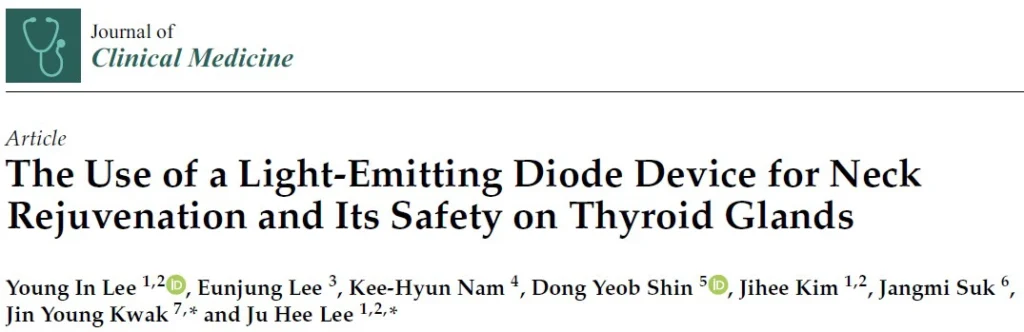
Study Objective
To evaluate the safety and efficacy of a home-use LED device (630 nm red and 850 nm near-infrared) for neck rejuvenation, with a specific focus on its effects on the thyroid and parathyroid glands.
Participants
- 30 adult women with visible neck wrinkles
- Excluded if they had known thyroid disease or abnormal thyroid function
Study Design
- Daily use of the LED device for 16 weeks
- Follow-up for 8 weeks post-treatment
- Thyroid function tests and ultrasound imaging (including Doppler and texture analysis)
- Skin hydration, elasticity, and density measurements
Key Findings
Thyroid Safety
- No significant changes in:
- Thyroid hormone levels (T3, T4, TSH)
- Autoantibodies (anti-TPO, anti-thyroglobulin)
- Parathyroid hormone (PTH)
- Thyroid ultrasound features (volume, echogenicity, vascularity, nodules)
- One participant had elevated PTH due to vitamin D deficiency, not the LED device
Skin Rejuvenation
- Significant improvements in:
- Wrinkle depth (Lemperle scale)
- Skin hydration, elasticity, and density
- Effects persisted 8 weeks after stopping treatment
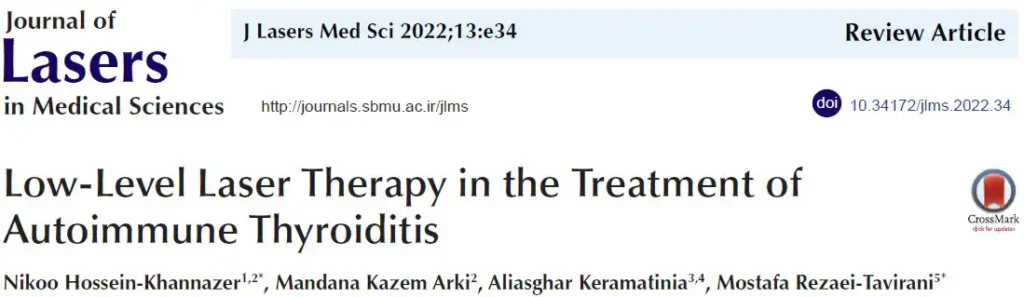
Study Objective
This is a review and summary of existing research, aimed to investigate how RLT affects cellular responses and to examine its potential role as a therapeutic approach for autoimmune thyroiditis.
Key Findings
The key takeaway from this review is that RLT showed promising benefits for people with autoimmune thyroiditis. After treatment, patients experienced reduced thyroid inflammation, reflected by lower levels of thyroid autoantibodies (especially anti-TPO), along with improvements in thyroid hormone balance. In simple terms, the immune system seemed to calm down, and the thyroid started functioning more smoothly instead of being constantly attacked.
What’s especially interesting is that these improvements happened without medication changes, suggesting the laser therapy itself played a role. The authors believe RLT may help by modulating the immune response and improving cellular energy and blood flow in thyroid tissue, which could support healing over time. While it’s not positioned as a replacement for standard treatment, the study suggests RLT could be a useful complementary therapy for managing autoimmune thyroiditis more gently and holistically.
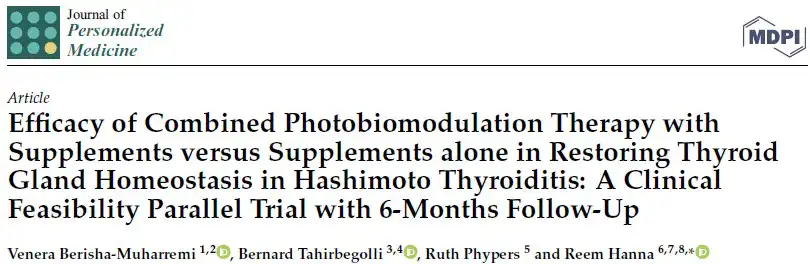
Study Objective
This study aimed to assess whether near-infrared (820 nm) used alongside selenium and vitamin D improves thyroid function, reduces thyroid antibodies, and supports weight-related outcomes in Hashimoto’s thyroiditis.
Participants
- 74 women aged 20-50, diagnosed with Hashimoto’s Thyroiditis. 18 RLT participants and 20 control participants completed the full study
- Divided equally into:
- Group 1: RLT and supplements
- Group 2: supplements only
- 6-month follow-up period
Study Design
RLT Protocol:
• 6 total sessions (820 nm, 200 mW) twice weekly for 3 weeks
• 8 irradiation points across thyroid lobes
Supplement protocol (both groups):
• Selenium 100 mcg/day
• Vitamin D replacement if serum levels <40 ng/mL
Key Findings
Group 1 (RLT + Supplements) Showed:
- Significant reductions in:
- TSH
- Anti-TPO and anti-TG antibodies and remained low at 6 months
- LT4 (levothyroxine) dosage
- Body weight, BMI, waist and hip circumference
- Significant increases in:
- FT3 and FT4 (thyroid hormones)
- Several RLT participants decreased LT4 dosage over the study period
- Improved overall thyroid hormone homeostasis.
Group 2 (Supplements Only) Showed:
- No significant improvements in thyroid function or anthropometric measures (body weight indicators)
- The supplements-only group showed no significant antibody changes.
- The supplements-only group showed stable or increased LT4 demand.
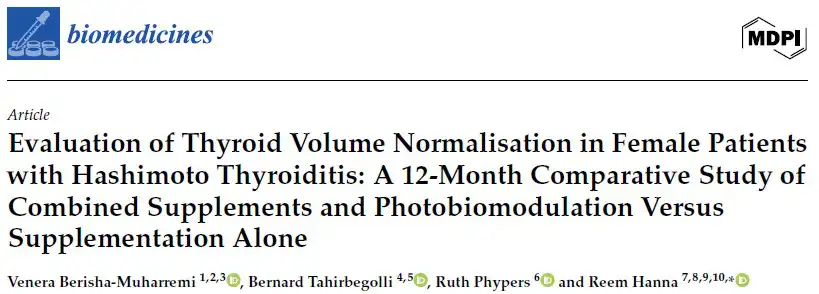
Study Objective
Evaluate whether RLT + supplements is more effective than supplements alone in normalizing thyroid volume (TV) and improving thyroid function in female Hashimoto’s patients over 12 months.
Participants
- 97 women aged 20–50, diagnosed with Hashimoto’s Thyroiditis.
- Group 1: RLT and supplements (n = 51)
- Group 2: supplements only (n = 46)
Study Design
RLT Protocol
- 6 total sessions (820 nm, 200 mW) twice weekly for 3 weeks
- 8 irradiation points across thyroid lobes
Supplement Protocol
- Selenium 100 mcg/day
- Vitamin D replacement if serum levels <40 ng/mL
Key Findings
Thyroid volume:
- Group 1: thyroid volume normalization increased from 17% → 96% over 12 months.
- Group 2: No meaningful thyroid volume improvement (≈52% → 52%).
Thyroid function:
- Significant reductions in TSH, anti-TPO, anti-TG, and increases in FT3/FT4 in RLT group only.
Anthropometrics:
- Group 1 showed significant decreases in BMI, waist/hip ratio, and waist/hip circumferences.
Overall: RLT + supplements consistently outperformed supplements alone across all clinical, biochemical, and structural thyroid outcomes.
Frequently Asked Questions
Citations in Alphabetical Order
Berisha-Muharremi, V., et al. (2023). Efficacy of Combined Photobiomodulation Therapy with Supplements versus Supplements Alone in Restoring Thyroid Gland Homeostasis in Hashimoto Thyroiditis: A Clinical Feasibility Parallel Trial with 6-Months Follow-Up. Journal of Personalized Medicine, 13(8), 1274. https://doi.org/10.3390/jpm13081274
Berisha-Muharremi V., et al. (2025). Evaluation of Thyroid Volume Normalisation in Female Patients with Hashimoto Thyroiditis: A 12-Month Comparative Study of Combined Supplements and Photobiomodulation Versus Supplementation Alone. Biomedicines, 13, 1555. https://doi.org/10.3390/biomedicines13071555
Höfling, D. B., et al. (2010). Low-Level Laser Therapy in Chronic Autoimmune Thyroiditis: A Pilot Study. Lasers in Surgery and Medicine, 42(6), 589–596. https://doi.org/10.1002/lsm.20941
Höfling, D. B., et al. (2012). Assessment of the Effects of Low-Level Laser Therapy on the Thyroid Vascularization of Patients with Autoimmune Hypothyroidism by Color Doppler Ultrasound. ISRN Endocrinology, 2012, Article ID 126720. https://doi.org/10.5402/2012/126720
Höfling, D. B., et al. (2013). Low-level laser in the treatment of patients with hypothyroidism induced by chronic autoimmune thyroiditis: a randomized, placebo-controlled clinical trial. Lasers in Medical Science, 28(3), 743–753. https://doi.org/10.1007/s10103-012-1129-9
Höfling, D. B., et al. (2018). Safety and Efficacy of Low-Level Laser Therapy in Autoimmune Thyroiditis: Long-Term Follow-Up Study. International Journal of Endocrinology, 2018, Article ID 8387530. https://doi.org/10.1155/2018/8387530
Hossein-Khannazer, N., et al. (2022). Low-Level Laser Therapy in the Treatment of Autoimmune Thyroiditis. Journal of Lasers in Medical Sciences, 13, e34. https://doi.org/10.34172/jlms.2022.34
Lee, Y. I., et al. (2021). The Use of a Light-Emitting Diode Device for Neck Rejuvenation and Its Safety on Thyroid Glands. Journal of Clinical Medicine, 10(8), 1774. https://doi.org/10.3390/jcm10081774